
Description
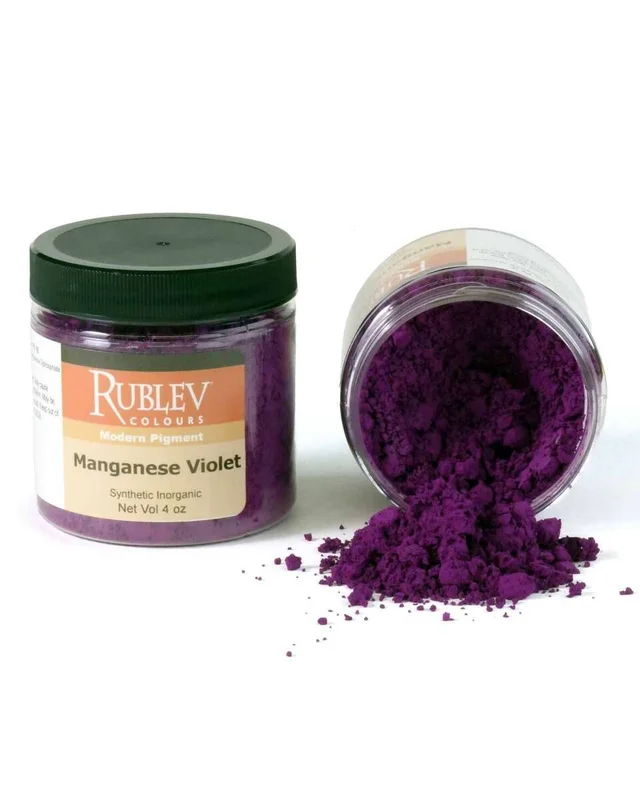
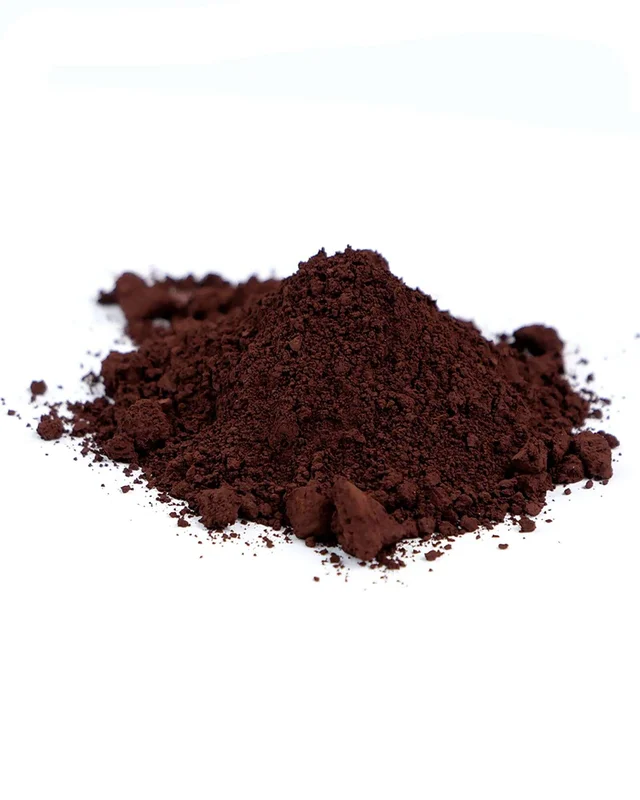
Manganese Violet (Pigment Violet 16) is a synthetic inorganic pigment offering a distinctive reddish-purple hue that balances vibrancy and softness. This unique color is highly regarded for creating atmospheric effects and delicate tonal transitions, making it a valuable tool for both artists and industrial applications. Known for its exceptional lightfastness, rich color, and versatility, Manganese Violet produces stable and reliable results across various uses, from fine art to cosmetics and beyond.
| Pigment Names | |
| Common Names | English: Manganese Violet French: Violet de Manganèse German: Manganviolett Italian: Viola di Manganese Japanese: マンガンバイオレット Russian: Марганцевый фиолетовый Spanish: Violeta de Manganeso |
| Synonyms | Permanent Violet, Violet de Manganèse, Manganviolett, Mangano Violet, Permanent Violet Bluish, Permanent Violet Reddish, Permanent Manganese Violet, Nuernberger Violet, Nurnberg Violet, Nürnberg Violet, PV16 |
Origin and History
Manganese Violet was first synthesized in 1866 by E. Leykauf and later commercially introduced in 1890 by Winsor & Newton under the name “Permanent Violet.” Winsor & Newton identified its potential due to its vibrant and stable color properties, which addressed the need for a reliable and lightfast purple pigment. Artists, particularly the Impressionists, enthusiastically received the pigment, enabling the creation of nuanced shadows and atmospheric effects.
Artists such as Claude Monet employed Manganese Violet extensively in works like his Rouen Cathedral series, where its ability to capture subtle light variations was unmatched. Similarly, Paul Signac utilized the pigment in his pointillist landscapes to achieve luminous purple highlights. Modernist painters also appreciated its depth and versatility in abstract compositions. These historical examples highlight its enduring appeal in fine art.
Source
This pigment is chemically identified as ammonium manganese(III) pyrophosphate (NH₄MnP₂O₇), a compound celebrated for its exceptional stability and long-lasting performance. It is produced through a controlled high-temperature reaction involving manganese dioxide, phosphoric acid, and ammonium dihydrogen phosphate. The result is a fine, semi-transparent powder with a vibrant reddish-purple hue, offering both permanence and versatility.
Permanence and Compatibility
Manganese Violet is renowned for its excellent lightfastness, making it ideal for artworks requiring longevity and resistance to fading. It maintains moderate heat stability, remaining intact up to 250°C. The pigment’s semi-transparent to semi-opaque qualities allow artists to layer and blend colors effectively, enhancing creative possibilities.
While highly compatible with most mediums, Manganese Violet is less suitable for use in environments with strong acids or alkalis, as these can compromise its stability. Artists often combine it with Viridian (PG18) to produce subtle blue-grey tones, adding complexity and depth to their palettes.
Oil Absorption and Grinding
Manganese Violet has a moderate oil absorption rate, typically requiring approximately 21 grams of linseed oil per 100 grams of pigment. This balance makes it an efficient and practical choice for oil painting, providing smooth and vibrant mixtures without excessive oil use. Its fine particle size facilitates grinding and integration into various artistic mediums, including watercolors and acrylics.
Toxicity
Manganese Violet is considered non-toxic and safe for both artistic and cosmetic applications, offering a significant advantage over pigments like cadmium-based colors, which are known for their higher toxicity levels. This safety profile makes it well-suited for sensitive uses, including cosmetic formulations designed for application around the eyes and lips. It has been approved by regulatory bodies such as the U.S. Food and Drug Administration (FDA) and the European Union for these purposes. However, as with all powdered pigments, it is advisable to use proper ventilation and protective equipment when handling to minimize inhalation risks.
Product Highlights
- Pigment Classification: Synthetic inorganic pigment
- Colour Index Name: Pigment Violet 16 (PV16)
- Lightfastness: Excellent
- Opacity: Semi-transparent to semi-opaque
- Applications: Ideal for fine art, cosmetics, and industrial uses
- Non-Toxic: Approved for cosmetic applications, including around the eyes
| Pigment Information | |
| Color: | Reddish Violet |
| Pigment Classification: | Synthetic inorganic |
| Common Name: | Manganese Violet |
| Colour Index Name: | Pigment Violet 16 (PV16) (C.I. 77742) |
| Chemical Name: | Ammonium Manganese(III) Pyrophosphate |
| Chemical Formula: | NH₄MnP₂O₇ |
| CAS Number: | 10101-66-3 |
| ASTM Lightfastness | |
| Acrylic: | Not Listed |
| Oil: | I |
| Watercolor: | I |
| Pigment Properties | |
| Opacity: | Semi-transparent to semi-opaque |
| Lightfastness: | Excellent |
| Applications: | Suitable for all paint mediums; avoid environments with strong acids or alkalis |
| Physical Properties | |
| Density: | 2.7 g/cm³ |
| Loose Packing Density: | 0.3 kg/L 2.5 lbs/gal |
| Surface Area (BET): | 2.4 m²/g |
| Mean Particle Size: | 3.1 microns |
| pH: | 3.8 |
| Oil Absorption: | 21 grams of linseed oil per 100 grams of pigment |
| Residue 325 Mesh: | 0.02% |
| Heat Stability: | Stable up to 275°C (525°F) |
| Health and Safety | |
| Toxicity: | Non-toxic |
| Handling Recommendations: | Use protective equipment and proper ventilation to avoid inhalation of powdered pigment |
Reviews
There are no reviews yet.